
The most important points at a glance
Paper processes tie up staff time in the dental practice every day – time that's missing at the treatment chair – and since October 1, 2025, the use of the electronic patient record has been mandatory for dental practices anyway.You achieve the greatest effect when you first digitize the most paper-heavy processes: medical history intake, treatment documentation, and the communication of treatment plans.A consistently paperless practice reduces your administrative burden, reliably meets the legal retention and data protection requirements, and gives your team noticeably more time for patients.
It's Monday morning in your dental practice. At the reception desk, printed medical history forms are piling up, in the treatment room a patient is waiting for their treatment and cost plan, which a staff member is currently copying by hand, and in administration someone is searching for a ten-year-old patient file. Much of this could be done digitally today in seconds. This is exactly where the paperless practice comes in.

What does a paperless dental practice concretely bring you?
A paperless dental practice replaces manual paper processes – from medical history intake through documentation to billing – with digital workflows, saving your team time that directly benefits patient treatment at the chair. The benefits can be divided into three areas: practice workflow, patient satisfaction, and administration.
More efficient practice workflow: You eliminate sources of error that arise from manually transferring data, and your team no longer has to print, scan, or archive anything. Information is immediately in the right place in your practice management system.
Higher patient satisfaction: Your patients fill out medical history and consent forms conveniently on their own smartphone – at home or in the waiting room. This shortens wait times and relieves the front desk of the tedious task of following up on missing information.
Less administrative burden: Findings, plans, and billing data can be processed further with just a few clicks instead of being entered by hand multiple times. Every minute saved in administration is one more minute for your patients.
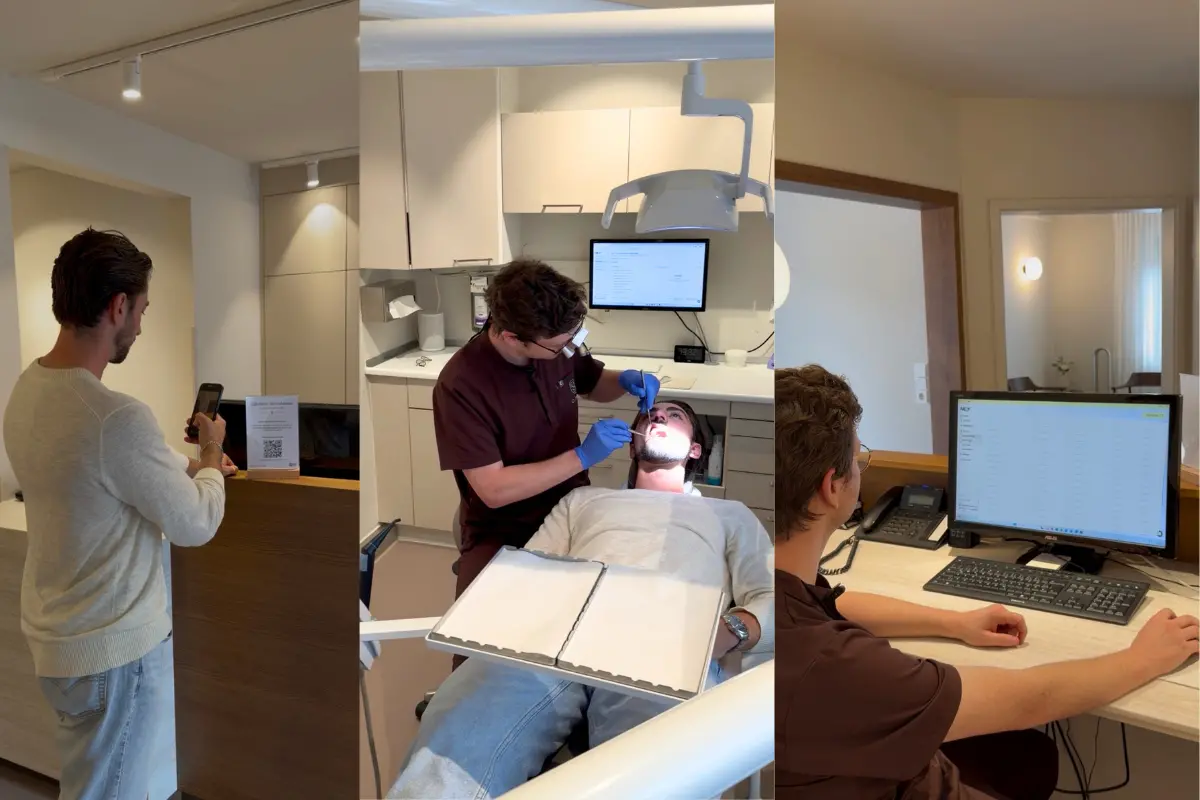
Getting started almost always works best where most patients first encounter paper: the medical history intake. With Nelly's digital medical history intake, your patients fill out the form on their own device in a legally compliant way, sign with a single click, and the data flows automatically into your practice management system. They don't need to install an app for this – the input runs directly through the browser.
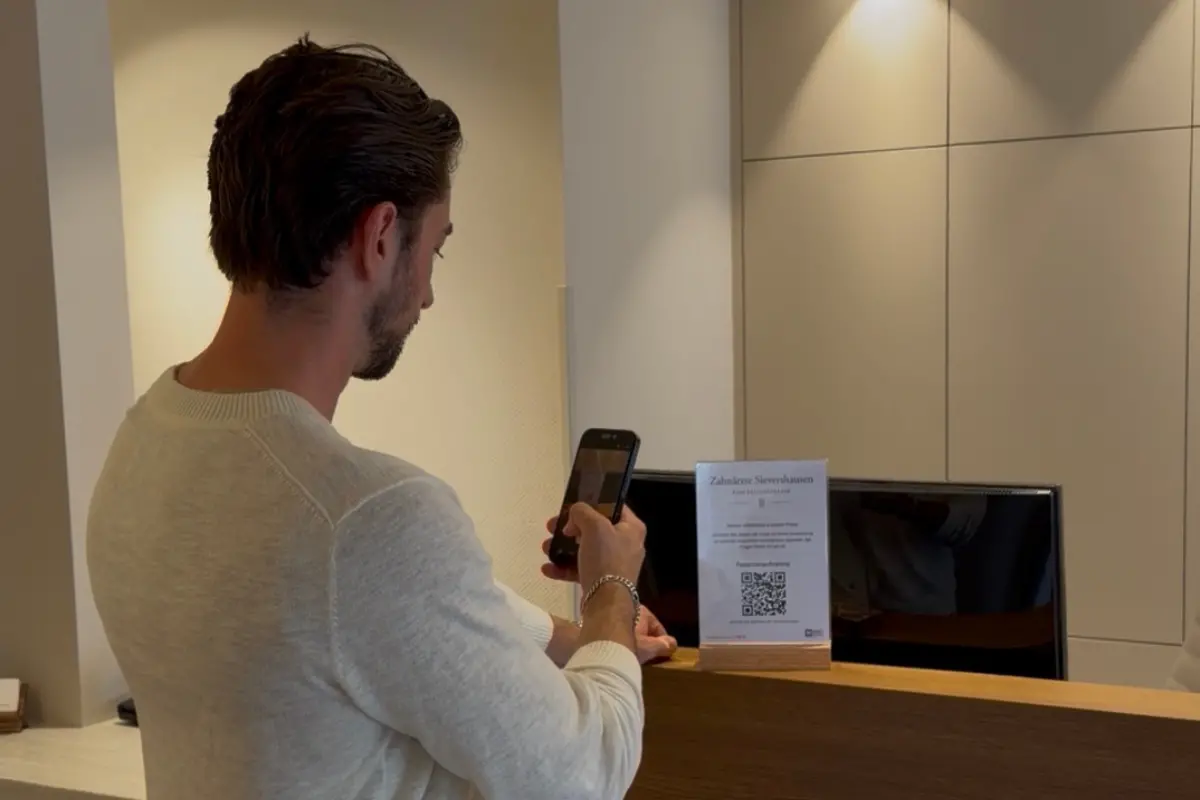
Learn more about Nelly's digital medical history intake here.
How does your treatment documentation become paperless – without you having to type more?
Treatment documentation becomes paperless when you no longer record it by hand or by keyboard, but capture it directly and electronically in the treatment file – Section 630f of the German Civil Code (BGB) explicitly puts the electronic form on equal footing with the paper form. The documentation obligation is thus fulfilled as long as subsequent changes remain recognizable and the data is stored securely.
The real problem is rarely the obligation itself, but the effort involved. Documenting every treatment properly costs time – time you often don't have between two patients. The result: notes get added in the evening, details get lost, and in a dispute, an incomplete file can even lead to a reversal of the burden of proof under Section 630h BGB.
This is where Nelly's AI documentation comes in. Instead of typing, the AI simply listens during the patient conversation. The solution converts what's said into structured documentation and suggests matching billing codes. This way you leave the treatment room without any open notes – and the documentation is done before the next patient arrives.
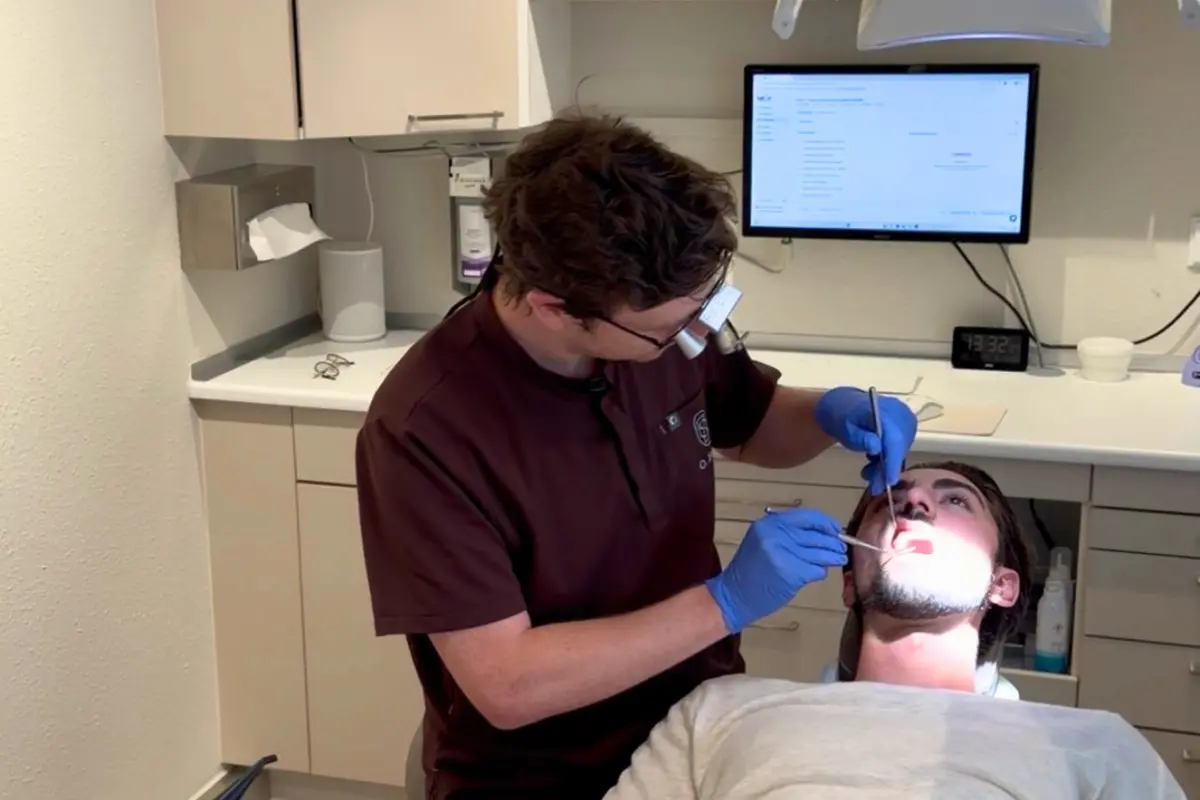
Learn more about Nelly's AI Documentation here.
How do you send treatment and cost plans paperless, without having to follow up by phone?
Treatment plans become paperless when you transmit them digitally to the patient instead of printing them out and handing them over – this shortens the time until acceptance and saves your team the manual follow-up calls. Especially with the treatment and cost plan (HKP), speed often determines whether a treatment happens at all.
The typical process costs you time and revenue at several points. The plan is printed and handed over, the patient takes it home, thinks it over – and doesn't get back in touch. Your team has to call and follow up, often more than once. Every open plan is not just administrative effort, but potentially lost revenue.
Nelly's AI Plan Agent automates exactly this process. Treatment plans are sent digitally, the patient can conveniently view and approve them, and the solution handles the follow-up independently. Your team no longer has to call and chase people down, and you can see at any time which plan is in which status.
"We no longer have to call and follow up on treatment and cost plans. Approvals come in faster, we can plan better, and our team is noticeably relieved."Helen Stürmer, former practice manager
Learn more about Nelly's AI Plan Agent here.
What do you need to consider regarding retention periods, data backup, and access protection?
In the paperless practice, the same legal obligations apply as for analog files: patient records must be kept for at least ten years after the conclusion of treatment (Section 630f (3) BGB), secured in compliance with GDPR, and protected from unauthorized access. Digitally, fulfilling these obligations is usually even easier – if you keep a few points in mind.
Which retention periods apply to dental practices?
For dental treatment documentation, a minimum period of ten years after the conclusion of treatment generally applies. Longer periods apply for certain documents:
- X-ray images: 30 years (Section 85 of the Radiation Protection Act)
- Minors: The period doesn't begin until the patient's 18th birthday
- Liability cases: Civil claims can have effects for up to 30 years (Section 199 BGB), which is why many statutory dental associations (KZVs) advise keeping records longer when in doubt
The longest applicable period always governs. Digital archives have a clear advantage here: they take up no storage space, remain permanently legible, and can be found in seconds.
How do you back up your data correctly?
Back up your data regularly – ideally daily – and in multiple locations. A GDPR-compliant cloud solution, separate servers, and additional external storage media have all proven effective. With every provider, make sure that data is processed in Germany or within the EU, and that changes are logged in a tamper-proof manner.
The same rule applies to access protection as with paper: only you and your practice team may view the data (keyword: confidentiality obligation). In digital systems, this can even be controlled more precisely than in a filing cabinet, through role- and rights-based access.
Does the ePA replace your own documentation?
Important for your practice: the electronic patient record, mandatory since October 2025, supplements your documentation but does not replace it. Your practice remains obligated to fully document and retain the treatment in your own records. The ePA serves the exchange of information between healthcare providers – your own records remain the legally authoritative basis.
Conclusion: The right time for the paperless practice is now
The paperless practice is no longer a question of whether, but of when. Those who digitize the most paper-heavy processes first – medical history intake, documentation, and treatment plan communication – immediately gain back time and meet legal obligations more reliably than on paper. Start where your team is currently losing the most time. Every digitized process brings you closer to what it's really about: treating your patients.
Get informed now, no obligation
Take the first step toward the paperless practice. Schedule an appointment now and in a short conversation we'll show you which processes are worth digitizing first in your dental practice.
FAQs about the paperless practice
Is the paperless practice legally permitted in a dental practice?Yes. Section 630f BGB explicitly permits the treatment record in electronic form as well and puts it on equal footing with the paper form. What matters is that subsequent changes remain traceable, the data is secured in compliance with GDPR, and the statutory retention periods are observed. Digital and analog documentation are therefore legally equivalent.
How long do I have to retain patient records in a dental practice?Generally at least ten years after the conclusion of treatment (Section 630f (3) BGB). For X-ray images, 30 years applies; for minor patients, the period doesn't begin until their 18th birthday. Because of possible liability claims, many statutory dental associations (KZVs) recommend keeping records longer when in doubt.
Does the electronic patient record (ePA) replace my own documentation?No. The ePA supplements your documentation but does not replace it. Your dental practice remains obligated to fully document and retain every treatment in your own records. The ePA primarily serves the exchange of findings between healthcare providers and remains a patient-managed record.