The Most Important Points in Brief
GOZ governs private services with a flexible scaling factor between 1.0 and 3.5 (in justified exceptional cases with a written fee agreement, even beyond that), while BEMA works with fixed point values for statutory insured patients, negotiated regionally between KZV and health insurers.Anyone who clearly separates both systems and carefully documents justifications for higher scaling factors avoids loss of fees, reclaims, and disputes with patients.With a digital billing partner, you shift the administrative burden away from the treatment chair, secure immediate liquidity, and reclaim hours each week for patient care.
A patient is in the chair, the treatment is billable under private law – and at the reception desk the question arises: GOZ code with standard factor 2.3, or justified increase? An hour later comes the next case, this time a statutory patient with BEMA logic. These switches are everyday reality in every practice. And this is exactly where most billing errors occur that cost you money at the end of the month.
How Does Private Dental Billing Work Under GOZ?
The Fee Schedule for Dentists (GOZ) governs binding rules for billing dental services outside statutory health insurance. It applies to private patients, self-payers, and additional services for statutory insured patients.
The GOZ defines both the billable treatment options and the associated fee rates.
For each service, a fixed fee code with a point value is stored, which forms the basis of your fee calculation. The GOZ also stipulates that you must comprehensively inform patients about expected costs before treatment begins – in writing and verifiably. Anyone who is careless here risks not only disputes but also loss of fees.
Which Services Are Listed in the GOZ?
The GOZ is extensive and is divided into several service categories:
- Diagnostic services: Examination of the oral cavity, diagnosis, and consultation appointments.
- Prophylaxis and preventive measures: Preventive services such as professional teeth cleaning (PZR).
- Conservative services: Filling therapies for cavities, root canal treatments, and periodontal treatments.
- Surgical services: Extractions, root tip resections, and implant placement.
- Prosthetic care: Fabrication and fitting of crowns, bridges, or dentures.
- Orthodontic treatments: Measures to correct tooth misalignment, for example with braces.
How Do You Calculate Your Fee Under GOZ?
GOZ billing follows a point system: each service has a fixed point value that is multiplied by a legally defined euro amount.
The current point value is 5.62421 cents.
In addition, you set a scaling factor between 1.0 and 3.5 for each service – depending on the difficulty and complexity of the treatment. The standard factor is 2.3. If you exceed this value, you must justify the increase in writing – transparently, case-specifically, and documented in the patient file. Generic justifications will not hold up under review.
Billing above the 3.5x maximum rate is legally permissible but requires a mandatory individual, written fee agreement with the patient before treatment begins.
Example Fee Calculation
A service with 80 points and standard factor 2.3:80 points × 5.62421 cents × 2.3 = €10.35
For more complex treatment with factor 3.0:80 points × 5.62421 cents × 3.0 = €13.49
What Are Private Dental Services and Analogous Billing Under § 6 GOZ?
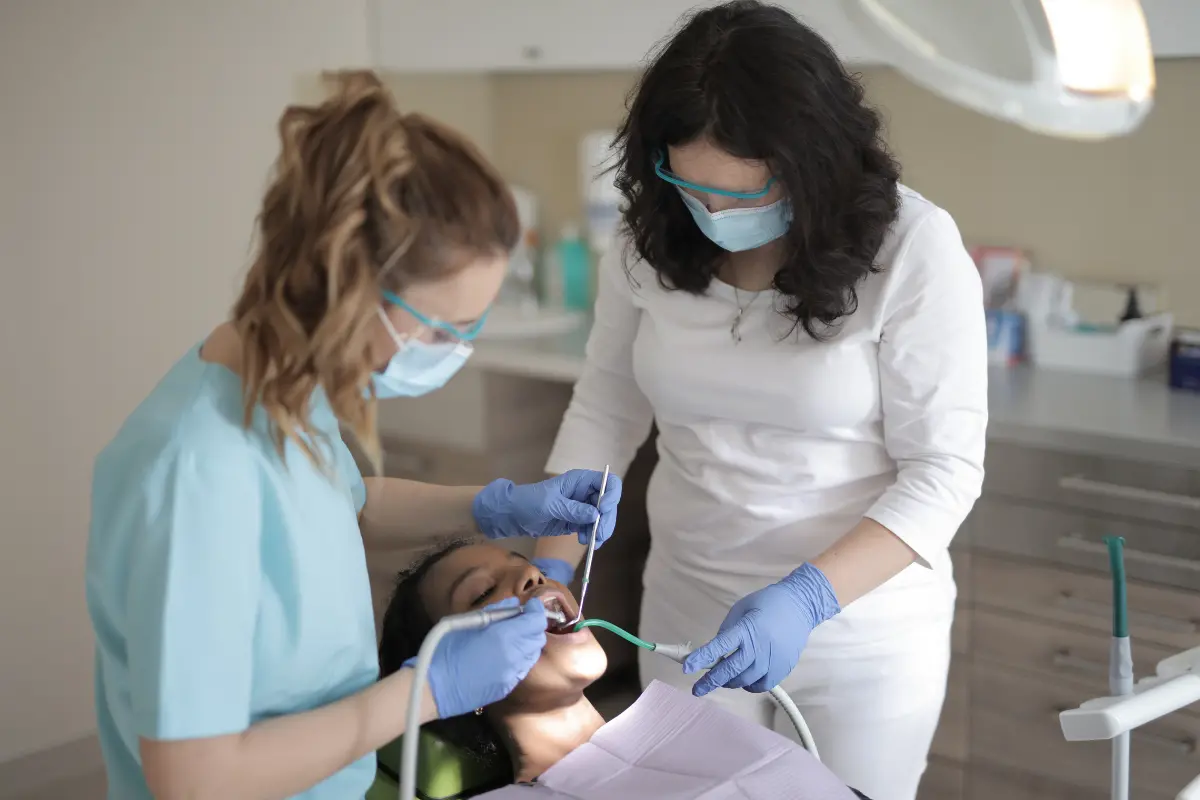
In addition to point value and scaling factor, you can also bill for private dental services not included in the statutory health insurance catalog – such as professional teeth cleaning, higher-quality filling materials, or aesthetic treatments like bleaching. These are borne by patients themselves.
A special feature is analogous billing under § 6 para. 1 GOZ: new, independent dental services not yet listed in the fee schedule can be billed via a GOZ service of equivalent type, cost, and time expenditure. Prerequisite in both cases: you agree on these services in writing with the patient before treatment begins. Without a signed agreement, the service is not enforceable.
This is precisely where many practices lose fees: justifications for higher scaling factors are missing, informed consent documents are incomplete, additional cost agreements for private dental services are made verbally.
With Nelly, you digitize this process entirely – informed consent, authorization, and fee agreement are captured by the patient directly on their smartphone before they sit in the chair. This saves your team time and legally secures your fees.
How Do You Bill Under BEMA with Statutory Health Insurance?
The Uniform Assessment Standard for Dental Services (BEMA) is the basis for billing with statutory health insurance. It specifies which services you may provide for statutory insured patients and which amounts the health insurers cover. Unlike the GOZ, you have no discretion in fee design here – assessment numbers and point values are fixed.
Important: For additional services beyond the BEMA spectrum, you bill under GOZ. Example: a high-quality composite filling in the posterior region or a PZR is generally billed privately, even if the patient is statutorily insured.
Which Services Are Listed in BEMA?
BEMA is also divided into several service areas:
- Diagnostic services: Initial examinations, diagnoses, and X-rays.
- Prophylaxis: Basic measures for tooth preservation such as fissure sealing.
- Conservative services: Standard fillings and root canal treatments.
- Surgical services: Tooth extractions and minor oral surgery.
- Prosthetic care: Standard dental prosthetics such as bridges or dentures.
- Orthodontics: Treatment of misalignment in children and adolescents.
Good to know: BEMA services are often limited to certain materials or techniques considered "appropriate and sufficient." More elaborate restorations are possible but must be agreed upon with the patient as an additional service and billed privately.
How Do You Calculate Your Fee Under BEMA?
BEMA billing also follows a point system. Each service has an assessment number that is multiplied by the regionally applicable point value. Here is an important difference from GOZ: the BEMA point value is not uniform nationwide.
It is negotiated annually between the respective Association of Statutory Dental Health Insurance Dentists (KZVen) and the state associations of health insurers – with the exception of Part 5 (dental prosthetics and crowns), where a nationwide uniform point value applies. This means: an identical service can result in different remuneration amounts depending on the federal state. There is no scaling factor as with the GOZ.
Example BEMA Billing
A single-surface composite filling (BEMA item 13a) has an assessment number of 32 points. With an assumed point value of €1.20:
32 points × €1.20 = €38.40
Note: The specific point value varies by KZV region, BEMA section, and quarter. Current values for your region can be found on your KZV's website. For dental prosthetic care, a nationwide uniform point value applies, negotiated jointly by KZBV and GKV-Spitzenverband.
While GOZ billing usually takes place immediately after treatment, BEMA services require you to wait for the quarterly billing cycle through your KZV. This strains your liquidity – especially during periods of high investment or personnel costs. With KZV factoring from Nelly, you bridge exactly this gap: your contractual dental fees are paid out immediately after submission, instead of being tied up in the quarterly cycle for weeks.
How Do You Reduce the Administrative Burden of Dental Billing?
The answer is straightforward: manual billing costs you and your team hours every week that are missing at the treatment chair. Every incomplete justification, every missing informed consent form, every delayed quarterly billing costs money. Anyone relying on Excel spreadsheets, paper forms, and manual processes is working against themselves.
Digital billing solutions orchestrate the entire workflow: patient informed consent, fee agreement, invoicing, payment collection, and KZV factoring all run in one system. Instead of maintaining three tools for three patient types, you have a single process for GOZ, BEMA, and self-payers.
Nelly is designed precisely for this practice reality. It supports you with billing for private patients (GOZ), statutory insured patients (BEMA), and self-payers in one workflow. KZV factoring handles billing with the health insurers, so you don't have to wait for the quarterly cycle. Patient informed consent and fee agreements are captured digitally by the patient – directly on their smartphone, legally documented.
Unlike traditional factoring services, Nelly offers a purely digital solution that saves your practice both time and costs.
This is achieved, for example, through the elimination of postage and printing costs. Liquidity bottlenecks are avoided since payouts occur immediately. Particularly interesting for new practice startups: no startup capital is required, while the direct cash flow simultaneously strengthens your creditworthiness.
Conclusion: Why Digital Billing Pays Off Now
GOZ and BEMA follow different logics – flexible and documentation-intensive on one side, regionally regulated and quarterly-bound on the other. Anyone managing both systems in parallel manually loses time, liquidity, and in case of doubt fees through incomplete documentation.
The solution is not a better Excel template, but a consistently digital workflow that brings together informed consent, agreements, billing, and payout. The sooner you take this step, the faster your practice will feel the effect – in cash flow, in staff deployment, and in the place that truly counts: at the treatment chair.
Get information without obligation: Let us jointly examine how GOZ, BEMA, and self-payer billing can be mapped digitally in your practice. Schedule a free consultation here.
FAQs on GOZ and BEMA Billing
What is the difference between GOZ and BEMA?The GOZ governs billing of private dental services for private patients, self-payers, and additional services for statutory insured patients. It works with a flexible scaling factor between 1.0 and 3.5. BEMA applies to contractual dental billing with statutory health insurance and works with fixed assessment numbers and regionally negotiated point values – without a scaling factor.
What is the maximum rate under GOZ?The maximum rate under GOZ is the 3.5x scaling factor. This can be applied for particularly difficult, time-intensive, or complex treatments. A case-specific written justification in the patient file is mandatory; for private patients, a fee agreement can additionally be concluded. In exceptional cases and with patient consent, billing above the 3.5x factor is possible. Going beyond the 3.5x maximum rate is legally permissible but requires a mandatory individual, written fee agreement before treatment begins.
What is external billing for dentists?With external billing, you hand over your billing processes to a specialized service provider who handles GOZ and BEMA services. Modern digital solutions like Nelly go beyond classic factoring and integrate patient informed consent, fee agreements, and payouts in a continuous workflow: you reduce administrative burden and secure immediate liquidity.