

What is part of practice organization? Overview of tasks
A functioning practice organization ensures that everyday life in the medical practice runs smoothly.
It comprises all organizational processes that are necessary to care for patients, coordinate treatments and complete administrative tasks.
The aim is to clearly structure processes Reduce waiting times and to relieve the practice team.
1. Patient admission and registration
Patient admission is often the first point of contact between practice and patient. This is where personal data is collected, insurance information is checked and the first organizational steps are taken.
Modern practices today rely on digital anamnesis or online forms. This allows patients to enter their data even before the appointment. This reduces the workload at reception (as well as Paper consumption) and makes it easier to further process the information.
2. Scheduling and organization of office hours
Well-thought-out scheduling ensures a structured practice process. It determines when patients are treated and how much time is planned for individual services.
The aim is to reduce waiting times and at the same time to plan enough time for investigations and discussions.
Optimized practices work with fixed appointment blocks for different treatments. Routine examinations, longer treatments and acute cases are planned in separate time windows.
3. Documentation and administration
Documentation is one of the central tasks of every practice organization. Treatment processes, diagnoses, consents and administrative information must be recorded completely and comprehensibly.
In addition to medical documentation, there are also numerous administrative tasks. This includes, for example, billing, appointment confirmations, archiving documents or processing forms.
digital systems can simplify many of these processes and make practice organization significantly more efficient.
4. Patient communication
A clear and reliable Communication with patients is also part of the practice organization. It ensures that information is passed on correctly and that patients know what to expect before, during and after treatment.
These include, for example, appointment confirmations, reminders of upcoming appointments or information on necessary documents.
Also inquiries about treatments, recipes or transfers are part of daily communication in practice.
Modern practices are now using digital channels for this purpose. Appointment confirmations or reminders can be sent automatically via SMS or email.
This reduces the number of missed appointments and relieves the practice team. At the same time, there is more time for personal discussions with patients in practice.
Structural organization of practice

In addition to daily processes, the basic structure of practice is also part of the practice organization.
Clear organizational frameworks ensure that processes run smoothly in everyday practice and that the team can work together efficiently.
Practical concept and strategic planning
A practice concept helps to structure the organization of the practice in the long term. This includes determining which services are offered, which target groups are in focus and how treatment processes are organized.
It is also useful to record central processes in writing. For example, checklists for patient admission, clear responsibilities within the team or defined processes for frequent treatments. Such standards make it easier to train new employees and ensure uniform processes in everyday practice.
Scheduling and rosters
Work schedules should be prepared at an early stage and should also take into account vacation periods, assignments or continuing education.
It is helpful fixed responsibilities to be defined in the team. For example, one person may be responsible for scheduling while another person takes on organizational tasks or material orders.
Regular team agreements also help to identify bottlenecks at an early stage and to better coordinate the daily routine.
Practice equipment and workplace organization
The design of workplaces also influences the organization of practice. Materials, instruments and documents should be arranged in such a way that they can be reached quickly and work distances remain as short as possible.
Many practices therefore work with clearly structured treatment rooms, standardized material storage facilities or fixed storage locations for important documents.
Conclusion: A clear organization saves time in everyday life and reduces unnecessary search channels in the practice team.
Managing and managing practice

In addition to the organizational structure, practice management is also part of a functioning practice organization.
These include measures to control processes, make economic decisions and coordinate the practice team.
Quality management in practice
Quality management is used to regularly review and develop organizational processes.
The aim is to avoid errors, standardize work processes and ensure the quality of practice processes over the long term.
For example, internal checklists or regular team meetings can be used for this purpose. Such measures make it possible to identify organizational weaknesses at an early stage and to improve processes in a targeted manner.
Business planning
The economic aspects of practice organization include planning income and expenditure, investments in new equipment, and analysis of important key figures.
Regular evaluations help to identify economic developments at an early stage.
This can include, for example, office workload, cancellations of appointments or incoming payments.
Examples of optimal practice organization in various fields
Practice organization requirements may vary depending on the subject area. While many short appointments often have to be organized in dental practices, the focus is on other processes in other areas.
1. Organization of practice in a dental practice
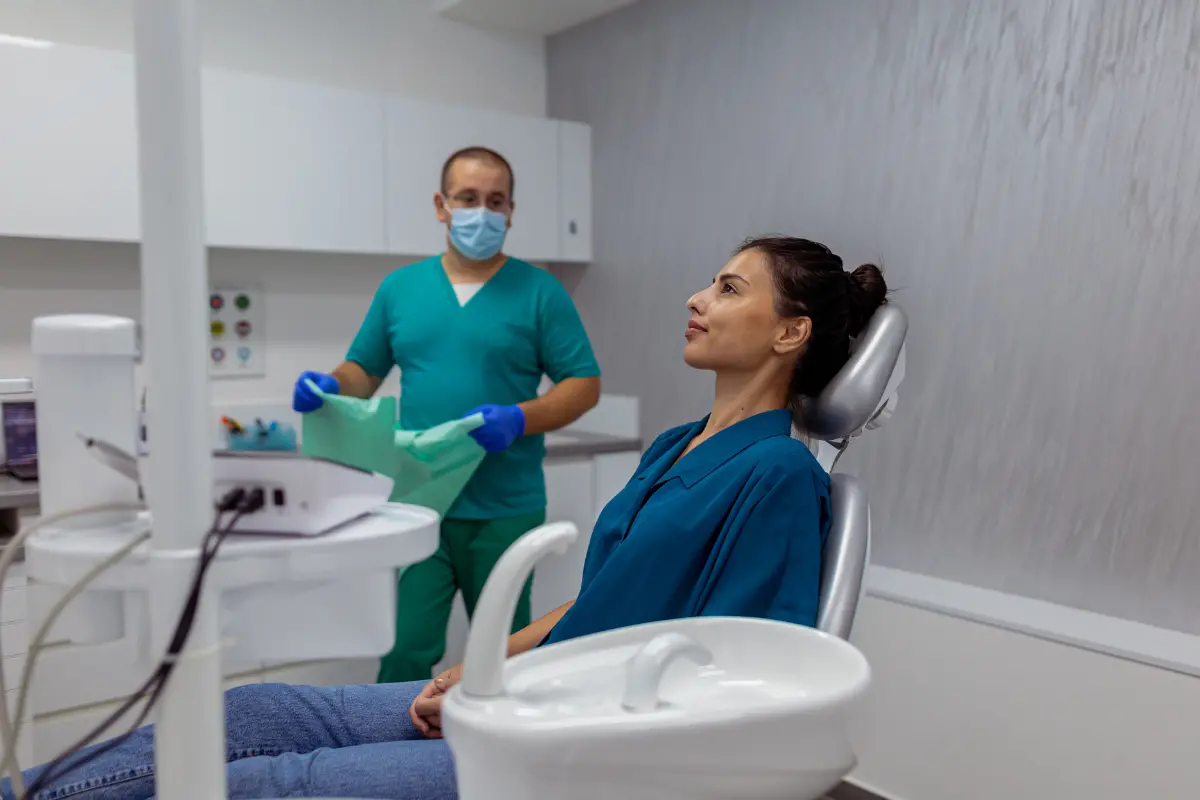
Dental practices often have many short appointments per day. That is why the daily schedule is often divided into treatment blocks. Prophylaxis, check-ups and longer treatments are planned separately.
It is typical, for example, to bundle prophylaxis appointments in the morning and plan longer treatments in the afternoon.
In addition, many practices reserve short time windows for pain patients or short-term appointments.
Where possible, optimized practices also prepare several treatment rooms in parallel so that patients can be called up more quickly and idle times are avoided.
2. Practice organization in physiotherapy

In physiotherapy practices, treatments often consist of series of several appointments. Patients therefore often receive a series of appointments for several weeks directly.
In order to keep track of things, many practices schedule fixed treatment times per therapist. For example, each therapist works in fixed 20 or 30 minute slots.
This makes it easier to coordinate rooms, devices and personnel and avoid scheduling overlaps.
In addition, certain therapy rooms or devices are often assigned to fixed time windows.
3. Veterinary practice organization

Veterinary practices must organize scheduled appointments and acute emergencies at the same time. That is why many practices work with a mix of appointment hours and open time slots.
It is typical, for example, to schedule certain time blocks for vaccinations or routine examinations and also to keep emergency times free on a daily basis.
At the same time, examination, treatment and documentation must often be carried out in quick succession.
Many veterinary practices therefore organize registration, examination and treatment in clearly separate areas so that an overview is maintained even when there is a high number of patients.
Successfully introduce process optimization into practice organization
Optimizing practice processes doesn't have to happen all at once. It often makes more sense to digitize individual processes step by step and gradually improve organizational processes.
Digital solutions in particular can help practices reduce administrative tasks and make everyday practice more efficient.
With Nelly Can various organizational processes be digitally supported in practice:
- Digital patient recording: Patients can fill out their medical history online before the appointment.
- Automated reminders: Follow-ups or document signatures can be sent to patients via SMS.
- Digital document management: Consent, clarification forms and other documents can be created and signed digitally.
- Digital invoices and payments: Invoices are sent electronically and can be paid directly online.
- Integration into existing systems: Nelly can be integrated into many practice management systems and combines several processes together.
Would you like to make your practice organization more efficient? Let yourself non-binding advice, like Nelly Can support your practice in digitizing processes.
Common questions
Which tasks are part of the practice organization?
Practice organization includes all organizational processes that enable the daily operation of a practice. This includes patient admission, appointment planning, organization of consultations, documentation of treatments and various administrative tasks. This also includes internal processes such as work schedules, material organization or coordination within the practice team. The aim is to ensure a smooth daily practice and to provide patients with efficient care.
How can practice organization be improved?
Practice organization can be improved primarily through clear processes and structured planning. Fixed scheduling structures, clearly defined responsibilities within the team and regular coordination within the practice team are helpful, for example. Standardised processes for recurring tasks can also make everyday practice easier. Many practices also rely on digital solutions to simplify administrative tasks and make processes more efficient.
Which areas are particularly important for good practice organization?
A functioning practice organization comprises several areas. Reliable appointment planning, structured patient admission, complete documentation and a clear distribution of tasks within the practice team are particularly important. In addition, business planning, quality management and well-organized practice equipment, i.e. play an important role in smooth practice operation.
What role do digital processes play in practice organization?
Digital processes can make many organizational tasks easier in practice. These include, for example, digital patient forms, electronic documentation, automated appointment confirmations or digital informational documents. Such solutions reduce administrative burdens and help you capture and manage information faster.
Which tools help with practice organization?
Practice management systems, scheduling software or digital documentation solutions are often used to support practice organization. These tools help coordinate appointments, manage patient data, and process administrative tasks more efficiently. Digital solutions can significantly make everyday practice easier, especially when planning appointments, documentation and communication with patients.